
لعبة صراحة أم جرأة بدون نت
GeeglaAppsTrivia
4.12.00 Reviews
- Version
- 10.0
- Installs
- 500.00K
- Age Rating
- Everyone
Screenshots

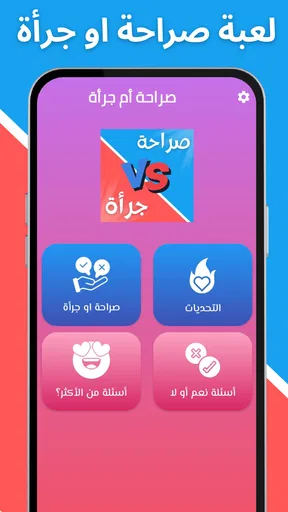
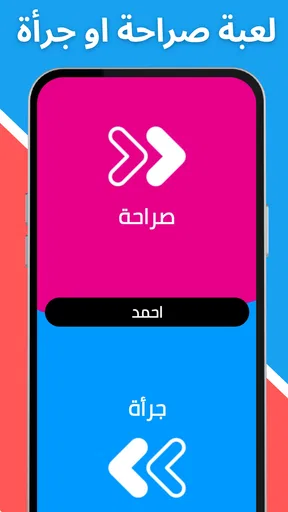
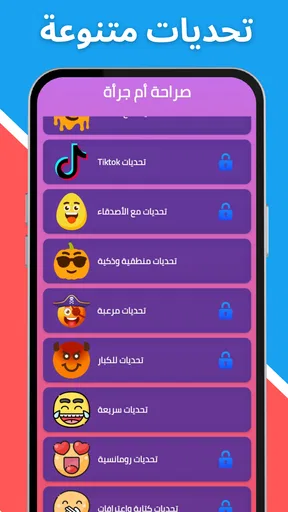
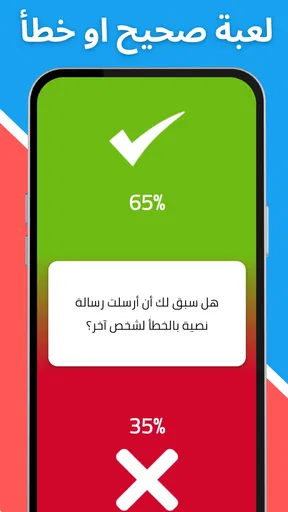
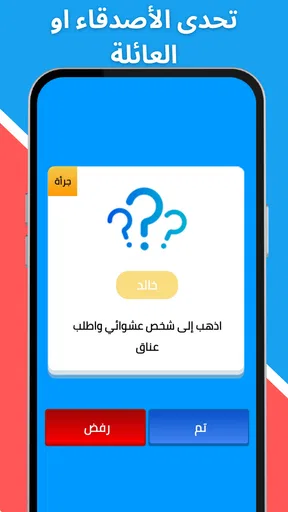
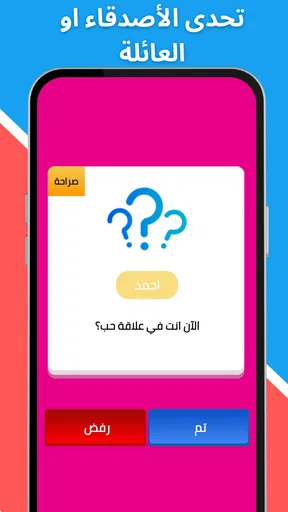
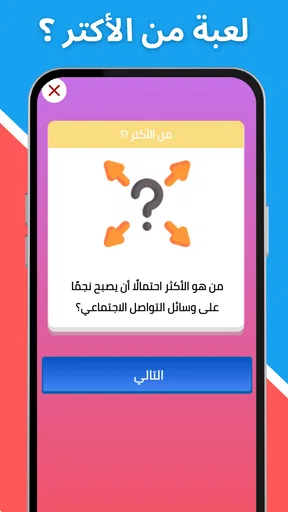
Our Review of لعبة صراحة أم جرأة بدون نت
 Analysis by Appyee
I enjoy trivia games most when they remove the pressure to prepare, explain complicated rules, or stay connected to a server. That is the appeal I found in لعبة صراحة أم جرأة بدون نت, a free party game from GeeglaApps built around familiar “truth or dare” prompts for friends and family. It is listed for Everyone, works on Android 7.0 and newer, and its main attraction is simple: open it when people are together, choose a prompt, and let the conversation take over.
This is not a traditional trivia game where I compete against a database of facts or chase a detailed leaderboard. It is closer to a social question-and-challenge tool with a light game structure. That distinction matters. If you want solo quizzes, timed rounds, or a deep progression system, this will feel limited. If you want an easy way to break a quiet moment at home, on a trip, or during a family gathering, the straightforward format makes much more sense.
How a normal round feels in practice
The baseline workflow is refreshingly short. I would gather the players, decide who goes first, open the game, and hand the phone around as each person takes a turn. The player then faces a choice between answering honestly or attempting a dare. That familiar choice is enough to create a rhythm without forcing one person to act as host.
The strongest part of this format is that the phone stays in the background. In many party games, players spend too much time reading instructions, creating profiles, or waiting for everyone to join the same room. Here, the social group supplies most of the energy. The app provides the prompt, while the people decide how seriously, humorously, or competitively to treat it.
I recommend agreeing on boundaries before starting, especially with mixed-age groups. The Everyone rating makes the game suitable for a broad audience, but a general rating does not mean every prompt will suit every family, friendship group, or personal comfort level. A quick rule such as “skip anything uncomfortable” keeps the game welcoming and prevents an awkward challenge from controlling the evening.
A realistic use case is a family sitting together after dinner. Instead of passing around a complicated board game, one person opens the app and begins with a few easy questions. Younger players can answer simple prompts, older relatives can tell stories, and the group can ignore a dare that does not fit the setting. The game works best when the goal is conversation rather than proving who is the bravest person in the room.
It also fits a casual gathering where people arrive at different times. I would not wait for a perfectly organized session. Start with the people already present, use short turns, and let late arrivals join naturally. Because the game does not depend on a lengthy setup, it can fill ten minutes or continue as a longer activity without requiring a formal beginning or ending.
The offline focus is particularly useful in places where connectivity is unreliable or undesirable. A road trip passenger, a group in a holiday home, or friends sharing a room can use it without turning the activity into a network troubleshooting session. The trade-off is that the experience depends heavily on the people around you; alone, it loses most of its purpose.
Settings and preparation that make a difference
Before handing over the phone, I would spend a moment checking the available in-game choices rather than tapping through immediately. The useful habit is not to assume that every prompt belongs in every situation. Look for the way the game separates or presents its truth and dare material, then choose the mode that matches the group’s age, mood, and willingness to participate.
That preparation is more important than it sounds. A relaxed family session needs a different tone from a late-night gathering with close friends. If the group is hesitant, begin with truth prompts because they usually require less physical space and less public attention. If everyone is energetic and comfortable, dares can make the session livelier. Switching between the two keeps the game from becoming predictable.
I also suggest deciding how skipped turns work before the first prompt appears. The app supplies the activity, but the group still needs a fair social rule. A player might be allowed to skip once, choose truth instead of dare, or simply pass without explanation. Establishing this early makes the game feel safer and avoids arguments when a prompt does not suit someone.
Another practical check is the phone itself. Increase the screen brightness if several people are reading together, keep the device within reach, and avoid placing it where one player can accidentally see a prompt before their turn. These are small details, but they preserve the surprise and stop the round from becoming a debate about who is controlling the screen.
I would also keep the app’s language and the group’s comfort level in mind. Since the store summary and short description are presented in Arabic, it is most natural for Arabic-speaking groups or players comfortable reading Arabic prompts. That makes it a better choice for the right audience than for a mixed group that expects every question to be available in English.
The developer is GeeglaApps, and the current version is 10.0. I would still treat the version number as a reason to keep the app updated through the normal store process, especially if the game is being prepared for a group event. An update can change how familiar the screens feel, so opening it once before the gathering is wiser than discovering the layout while everyone is waiting.
Faster patterns for keeping the group engaged
Experienced players will quickly notice that the best sessions are not simply a long sequence of random taps. I get better results by creating a repeatable pattern: start with two or three low-pressure turns, alternate truth and dare when possible, and save more playful challenges for after everyone understands the mood. This gives quieter players time to settle in instead of putting them under immediate attention.
For a small group, passing the phone in a fixed direction prevents unnecessary discussion. For a larger group, I prefer choosing the next player before the current turn begins. That keeps the pace moving and stops the activity from turning into a long negotiation over who should answer next. The app is quick enough to support this habit, but the group has to supply the organization.
One useful approach is to treat prompts as conversation starters rather than strict tests. After someone answers a truth question, allow one short follow-up from the group, then move on. This creates stories and laughter without letting one person dominate the entire session. With dares, set a clear time or effort limit informally so a playful challenge does not become a drawn-out performance.
I would avoid repeatedly choosing only the easiest option. That may feel comfortable at first, but it can make the game flat after several rounds. A better pattern is to keep the challenge level varied: simple questions for new players, more personal questions only when the group is clearly comfortable, and dares that match the available space. A living room, a car, and a public café should not be treated as the same environment.
There is also a useful shortcut in the social sense: if a prompt sparks a better question, let the group follow that thread briefly instead of forcing the next screen immediately. The app is valuable because it removes the burden of inventing every prompt, not because every tap must be obeyed mechanically. When the conversation becomes more interesting than the generated challenge, the conversation should win.
For repeat sessions, I would vary the host role even if the app does not require one. One player can manage the phone for a few rounds, then pass that responsibility along. This prevents a single person from controlling the tone and gives everyone a chance to see the prompts directly. It also helps when some players are more comfortable reading or explaining the questions than others.
Where the simple design reaches its limits
The same simplicity that makes the game accessible also limits its depth. I would not choose it as the main activity for players who expect detailed scoring, competitive rankings, elaborate avatars, or a campaign-like progression. Its appeal lies in immediate social interaction, so anyone looking for a long-term achievement system may finish a session feeling that there is little left to master inside the app itself.
It is also not the right replacement for a carefully moderated activity with children, strangers, or a group that does not yet trust one another. Truth and dare games can become uncomfortable when participants feel pressured to reveal private information or perform something embarrassing. The safest way to use this app is to treat every prompt as optional and to reject anything that crosses a personal boundary.
Offline play is convenient, but it also means the experience does not depend on live content or other players joining remotely. That is ideal for a room full of people and less useful when friends are in different locations. If your group is separated, an online party platform or a shared quiz service will usually provide better coordination and communication.
The game can also become repetitive during very long sessions. A prompt-based party format naturally depends on variety, and once the group has played for a while, the surprise may fade. I would use it in short blocks, combine it with snacks or another activity, and stop while people are still enjoying it. Extending any simple party game beyond its natural energy can make its limitations more obvious.
Privacy and comfort deserve practical attention too. Players should avoid offering sensitive personal details simply because a question asks for honesty. The person holding the phone should not pressure anyone to answer, and dares should never involve unsafe actions, property damage, harassment, or recording someone without permission. These rules are not extra decoration; they are what allow the Everyone rating to make sense in real family use.
Compared with ordinary conversation cards, the app is more convenient because the prompts are already on the phone and do not require carrying a box. Compared with a full trivia app, it is less knowledge-focused and less competitive. Compared with a random prompt generator, it has a clearer party identity because the truth-or-dare decision gives each turn a recognizable shape. The best alternative depends on whether your priority is social discovery, factual competition, or remote multiplayer.
Who will get the most from it
I think this game suits friends who already know one another, families looking for a light evening activity, and hosts who want something that can begin without preparation. It is especially useful when the group is willing to laugh at itself and when nobody expects a sophisticated ruleset. The free price removes the usual hesitation about trying it for a single gathering.
The audience size is already substantial, with more than half a million installs, and its average rating sits at 4.1 from around two thousand ratings. I read that as a sign of a generally positive reception rather than a guarantee that every group will love it. Party games are unusually dependent on personality, language, age, and setting, so the same prompt can be funny to one group and uncomfortable to another.
The app is less suitable for a person seeking a private solo game, a serious trivia challenge, or a polished online competition. It also may not fit a group that prefers structured board-game rules, visible scoring, and a clear winner. In those cases, a dedicated quiz title or a physical game with curated cards will offer more control and stronger replay structure.
Because it is free and rated for Everyone, I would consider it a low-risk addition to a family device, while still supervising how younger players interpret dares. The age label helps with broad suitability, but responsible use still comes from the adults and older players in the room. A short explanation about consent and skipping turns is more valuable than rushing into the first challenge.
My verdict after using the format seriously
لعبة صراحة أم جرأة بدون نت succeeds by staying focused. It does not try to become a trivia encyclopedia, a social network, or a competitive tournament. Instead, it gives a group an immediate reason to ask, answer, laugh, and pass the phone around. I like that the offline design supports spontaneous use, while the Arabic presentation gives it a natural place among Arabic-speaking friends and families.
My recommendation is strongest for short, in-person sessions. Open it before a gathering, check the available choices, agree on boundaries, and use a steady turn-taking pattern. Those habits make more difference than repeatedly searching for a perfect prompt. If you understand that the app supplies structure rather than a complete evening of entertainment, its simplicity becomes a strength.
At the same time, I would not oversell its replay value. Long sessions may feel repetitive, and players wanting scores, progression, or remote play should choose a different kind of game. The best experience comes from treating it as a social spark, not as a deep system to master. With that expectation, this free trivia-category party game is an easy recommendation for groups that want conversation without internet access or complicated setup.
Verdict
Strengths of لعبة صراحة أم جرأة بدون نت
- Works offline, making it useful during trips or areas with limited connectivity.
- Simple interface that new players can understand without lengthy instructions.
- Supports spontaneous group play at parties, sleepovers, or family gatherings.
- Offers a quick way to break the ice between friends and new acquaintances.
- No account creation is needed to start playing immediately.
Limitations of لعبة صراحة أم جرأة بدون نت
- Question variety may feel limited after several rounds with the same group.
- Some prompts may be awkward or unsuitable for younger players.
- Offline play prevents sharing challenges or results with distant friends.
- The experience depends heavily on players’ willingness to participate.
- Ads may interrupt the game or reduce the smoothness of navigation.
Similar Picks in This Category
View All
Millionaire 2026 Quiz & Trivia
Quiz & Trivia Games by Submarine Apps4.5

Brain Test 2: Tricky Stories
Unico Studio4.7

Trivia Crack: Brain Quiz Games
etermax4.4

QuizzLand. Quiz & Trivia game
Quiz & Trivia Games by Mno Go Apps4.8

Brain Test: Tricky Puzzles
Unico Studio4.7

Logo Quiz
bubble quiz games4.5
Frequently Asked Questions
What is لعبة صراحة أم جرأة بدون نت?
لعبة صراحة أم جرأة بدون نت is an offline Truth or Dare game designed for groups of friends, couples, or family members. Players take turns answering personal questions or completing fun challenges. Because the main content works without an internet connection, it can be used at parties, during trips, or anywhere with limited connectivity, without requiring an online account or multiplayer server.
Can I play لعبة صراحة أم جرأة بدون نت without an internet connection?
Yes, the app is intended to be playable offline after installation. You can open the game, choose the appropriate mode, and take turns with people nearby without mobile data or Wi-Fi. However, internet access may still be needed for downloading the application, receiving updates, viewing advertisements, or accessing optional features depending on the version installed on your Android or iOS device.
Is لعبة صراحة أم جرأة بدون نت suitable for children and teenagers?
The suitability of the game depends on the question and dare categories included in the installed version. Some prompts may be humorous and family-friendly, while others can be personal, embarrassing, or intended for adults. Parents should review the available content before allowing younger players to participate, and groups should skip anything uncomfortable, unsafe, inappropriate, or unsuitable for their age.
Does the game include different difficulty levels or categories?
Most versions of لعبة صراحة أم جرأة بدون نت provide a selection of truth questions and dare challenges, sometimes organized by age group, mood, or intensity. The exact categories can vary between releases, so it is worth checking the screenshots and app description before downloading. Having several levels makes it easier to choose relaxed questions for family gatherings or bolder challenges for adult friends.
Is لعبة صراحة أم جرأة بدون نت free to download and safe to use?
The game may be available as a free download, although the exact pricing, advertisements, and optional purchases depend on the platform and developer. Before installing, check the official store listing, requested permissions, privacy information, and recent user reviews. Avoid sharing sensitive personal information, and never perform a dare that could cause injury, damage property, violate privacy, or place anyone under pressure.
Play our best games!


